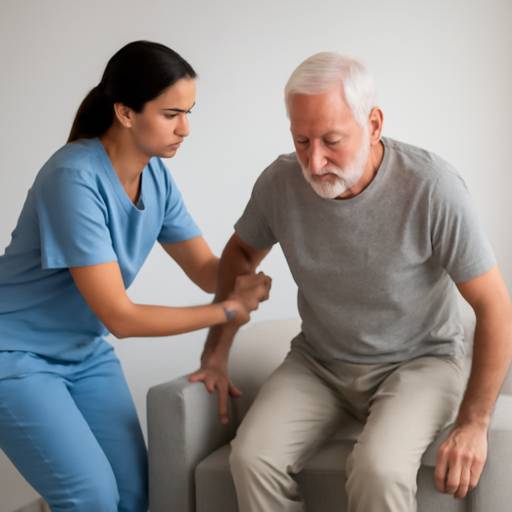
Patient mobility is a cornerstone of quality care, yet transferring individuals from a seated to a standing position remains one of the highest-risk tasks in healthcare and home care settings. Traditional manual lifts often require significant physical effort, while full-body sling lifts can feel cumbersome for patients who retain some weight-bearing ability. Enter the power sit to stand lift—a specialized device that bridges the gap between full dependency and independent mobility. These lifts are engineered to support patients who can bear partial weight, enabling them to participate actively in the transfer while dramatically reducing caregiver strain. At its core, a power sit to stand lift uses a motorized mechanism to assist the patient from a seated to a standing posture, with padded knee supports and a chest strap ensuring stability. Unlike manual sit-to-stand aids, which rely on the caregiver’s physical strength to crank or pump the lift, the power variant provides consistent, controlled movement at the push of a button. This technology has transformed the landscape of patient handling, offering a safer, more dignified experience for both the individual being lifted and the caregiver. Understanding how to select, operate, and optimize a power sit to stand lift is essential for any facility or home aiming to prevent injuries and promote independence.
Why a Power Sit to Stand Lift Outperforms Traditional Transfer Methods
Manual patient handling is one of the leading causes of workplace injuries among nurses, caregivers, and physical therapists. The physical demands of lifting a patient from a chair, bed, or toilet repeatedly can lead to chronic back pain, muscle strains, and even long-term disability. A power sit to stand lift addresses these risks by mechanizing the lifting motion, allowing caregivers to guide rather than hoist. The motorized lift provides a smooth, steady rise that respects the patient’s natural movement pattern, which is crucial for maintaining joint integrity and muscle engagement. Unlike full-body lifts that suspend the patient in a sling, sit-to-stand lifts encourage the patient to bear weight through their legs, which can help maintain bone density and circulation over time. For individuals recovering from hip or knee surgery, this partial weight-bearing is often prescribed by physical therapists as part of a rehabilitation protocol. The powered lift ensures that the assistance is delivered at a consistent speed, eliminating the jerky or uneven movements that can occur with manual alternatives. Moreover, the electric lift reduces the number of caregivers required for a transfer. In many cases, a single staff member can safely manage a transfer that would otherwise demand two or three people. This not only saves labor costs but also allows a care team to allocate human resources more efficiently across other tasks. From a facility’s perspective, investing in a power sit to stand lift can lead to fewer workers’ compensation claims and lower employee turnover rates, as caregivers feel less physical stress in their daily routines. The ergonomic advantages are clear: the lift takes the brunt of the weight, while the caregiver focuses on patient comfort, safety cues, and proper body mechanics. Additionally, many power lifts feature programmable height and speed settings, allowing customization for each patient’s unique needs—a flexibility that manual lifts cannot match.
Key Features to Evaluate When Choosing a Power Sit to Stand Lift
Not all power sit to stand lifts are created equal. When evaluating models for a healthcare facility or home use, several critical features must be scrutinized to ensure safety, durability, and patient comfort. First, the weight capacity is paramount. Most power lifts support patients up to 400–500 pounds, but bariatric-specific models can handle higher loads. Verify that the lift’s safe working load exceeds the heaviest patient who will use it. Second, the battery and charging system matters. A reliable power lift should operate on a rechargeable battery that holds a charge for at least a full shift of transfers. Look for models with backup manual lowering options in case of power failure. Third, the knee pad design directly impacts patient comfort. Padded, contoured knee supports that can be adjusted for width and height ensure a secure fit without causing pressure points. The chest strap or harness must be easy to fasten and release, with quick-attach clips that allow for efficient transfers without compromising safety. Fourth, examine the base and casters. A wide, stable base prevents tipping during lateral transfers, while locking casters provide security when the lift is stationary. Swivel casters with brakes are ideal for maneuverability in tight spaces like bathrooms or hospital rooms. Fifth, consider the patient lift range—the maximum and minimum height the lift can reach. This determines compatibility with various seating surfaces: low chairs, high beds, or standard wheelchairs. A lift that cannot adjust low enough may force caregivers to raise the patient’s chair, adding complexity and risk. Additionally, look for integrated scales that allow weighing the patient during the transfer, a useful feature for monitoring weight in long-term care. Finally, safety features such as emergency stop buttons, anti-slip footplates (also called footrests), and audible alarms when the battery is low are non-negotiable. Some advanced models include load-cell technology that alerts caregivers if the patient exceeds the safe weight limit. By systematically evaluating these elements, you can select a power sit to stand lift that not only meets regulatory standards but also enhances the daily care experience.
Real-World Applications and Success Stories with Power Sit to Stand Lifts
The clinical and operational benefits of power sit to stand lifts are best understood through real-world case studies. In a large rehabilitation hospital in the Midwest, staff faced a high rate of shoulder injuries from manually boosting patients after hip replacement surgeries. After introducing a fleet of power sit to stand lifts, the facility reported a 60% reduction in workplace injuries over six months. Caregivers noted that patients felt less anxious because the lift’s steady motion allowed them to maintain eye contact and communicate instructions throughout the transfer. The hospital also saw a decrease in patient falls during transfer attempts, as the lift provided a secure pivot point. Another compelling example comes from a home care agency specializing in aging-in-place services. A 78-year-old patient with Parkinson’s disease had become nearly bedbound because his wife could no longer safely assist him from his recliner. The agency deployed a portable power sit to stand lift, and within weeks, the patient was able to stand twice a day for brief periods, reducing pressure ulcer risks and improving his mood. His wife reported feeling less caregiver burden and more confident in managing his daily routines. In long-term care facilities, power lifts have been integrated into toileting and bathing protocols. One skilled nursing facility in Florida found that using a power sit to stand lift for every sit-to-stand transfer—rather than relying on gait belts and manual assistance—cut the average transfer time by 40%. This efficiency gain allowed nursing assistants to spend more time on direct patient interaction and less on physical labor. Additionally, facilities that incorporate these lifts often see higher staff satisfaction scores because employees feel valued when provided with tools that protect their bodies. From an economic perspective, a cost-benefit analysis from a 120-bed facility showed that the purchase of 15 power lifts paid for itself within 18 months through reduced insurance premiums and fewer paid days off for injuries. These examples underscore that power sit to stand lifts are not merely equipment—they are enablers of safer care environments and better patient outcomes.