
From Backyard Skies to Space Telescope Projects: Student-Friendly Astronomy Research
Breakthroughs in astronomy no longer require mountaintop observatories. With open datasets, modest equipment, and free analysis tools, learners can pursue astronomy research ideas that reveal real patterns in the universe. A powerful first step is mastering calibration and measurement: capturing dark, bias, and flat frames with a DSLR or small telescope; practicing plate-solving; and performing photometry of bright targets. These skills translate directly to larger datasets and prepare students for Space Telescope Projects using public archives from NASA and ESA.
One accessible pathway is detecting exoplanet transits in archival light curves. Students can extract data from TESS or ground-based repositories and search for the subtle dips that indicate a planet crossing in front of a star. Variable star studies are equally engaging: select targets from AAVSO, measure their brightness over time, and construct periodograms to classify pulsators or eclipsing binaries. Light pollution mapping projects blend astrophysics with environmental science—by quantifying sky brightness at different locations and times, students can connect human activity to observable changes in the night sky. For small-aperture telescopes, asteroid light curves and rotation periods offer concise timelines and publishable results when paired with careful uncertainties and error bars.
Public telescopes elevate these efforts. The MAST archive hosts Hubble and JWST datasets that can be analyzed in Python with AstroPy and photutils. In one high-impact example, students can retrieve Hubble images of an open cluster, perform point-spread-function photometry, and build a color–magnitude diagram to infer stellar ages and metallicities. Another route is spectral work: download medium-resolution spectra and identify key absorption lines to estimate radial velocities or chemical abundances. These Space Telescope Projects demand meticulous documentation—data provenance, pipeline steps, and calibration notes—which aligns with authentic scientific practice. Case studies can culminate in short white papers or poster sessions, emphasizing clarity in figures, reproducibility in code notebooks, and transparent handling of uncertainties, all crucial for advancing from school projects to undergraduate-level research.
Cognitive Science for High School: Rigorous, Ethical, and Insightful Investigations
Cognitive science for high school thrives at the crossroads of psychology, neuroscience, linguistics, and computer science. Its questions are approachable—How do memory and attention work? Why do illusions fool us?—yet its methods cultivate serious scientific habits. Students can start with well-known paradigms, replicate classic effects, and then test new variations. The emphasis is on clearly defined hypotheses, controlled stimulus presentation, careful measurement of response times or accuracy, and statistically sound analysis.
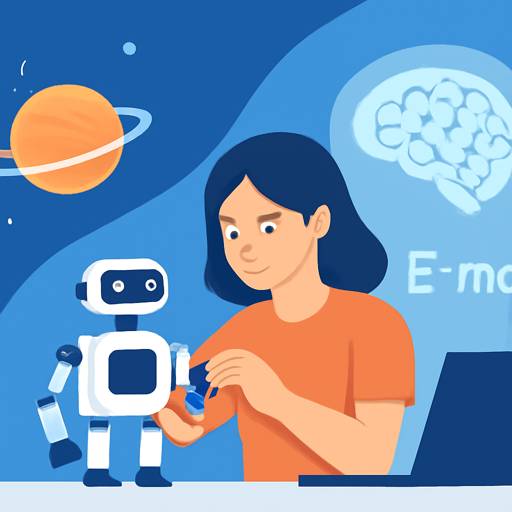
Practical projects include short-term memory experiments using word lists to test primacy and recency effects, attention studies like the Stroop task to measure cognitive interference, and visual search tasks that manipulate target-distractor similarity. For perception, change blindness demonstrations or ambiguous figure recognition show how expectation shapes experience. Decision-making investigations tap into utility and risk preferences through simple economic games. Implementation can be lightweight: deliver stimuli via web-based tools, record responses with millisecond timers, and store anonymized data in spreadsheets. Analysis with Python (pandas, SciPy) or R (tidyverse) introduces t-tests, ANOVAs, and effect sizes, reinforcing statistical literacy alongside experimental design.
Ethics is nonnegotiable. Projects must include informed consent, age-appropriate tasks, and participant privacy protections; classroom oversight should mirror IRB-style checklists, even when formal review isn’t required. Reliability comes from preregistration-like planning, pilot trials to calibrate difficulty, and transparent reporting that includes null results. A compelling case study is replicating the Stroop effect: hypothesize longer reaction times for incongruent color words, collect data in counterbalanced blocks, and report the effect size with confidence intervals. Extensions might explore bilingual advantages or practice effects over multiple sessions. For enrichment, compare findings to open datasets from cognitive repositories or benchmark against literature values. Throughout, highlight the link to AI: human attention limits inform interface design, memory models inspire retrieval algorithms, and perceptual illusions illuminate biases in computer vision systems—connecting classroom inquiry to cutting-edge technology.
Humanoid Robotics and Swarm Systems: Building Intelligence Together
Robotics brings theory to life, from biomechanics to control theory. For humanoid robotics for students, start with clear goals: stable walking, object manipulation, or expressive gestures. Hardware choices balance complexity and budget—micro servos for small limbs, brushless actuators for torque, and an IMU for orientation. Mechanical design should consider degrees of freedom, center of mass, and cable management; iterative prototyping with 3D-printed joints accelerates learning. Safety is a design constraint: torque limits, emergency stops, and soft padding reduce risk during falls or collisions. On the software side, students can implement inverse kinematics for limb positioning and basic gait generators for stepping, then refine with feedback control that fuses gyro and accelerometer data.
Control stacks can progress from simple state machines to model predictive control. PID loops stabilize joints; footstep planners coordinate timing; and zero-moment-point or capture point strategies mitigate tipping. Simulation-first workflows in Gazebo or CoppeliaSim help validate gaits before risking hardware, while ROS 2 and micro-ROS enable modular nodes for sensing, actuation, and planning. A motivating milestone is a “soccer challenge”: detect colored beacons, plan a path, and execute dribbles with compliant control. Students can benchmark performance on flat versus uneven terrain, quantifying step success rates and energy draw per step to bring scientific rigor to engineering. Open-source platforms (e.g., Poppy, DARwIn-OP) and community firmware reduce boilerplate, letting learners focus on perception, control, and behavior.
Swarm systems explore intelligence through collaboration. Build small differential-drive robots with distance sensors or cameras, and define simple local rules—aggregation, dispersion, or formation-keeping—that yield emergent global patterns. Communication can be implicit (sensing neighbors) or explicit (Bluetooth mesh, Wi‑Fi broadcast, or IR signaling). Students can test consensus algorithms for target selection, study resilience by removing agents, and quantify coverage, time-to-goal, or energy usage. Real-world inspiration includes search-and-rescue scouts, precision agriculture pollinators, and warehouse fleets. For guided opportunities, explore Swarm robotics student projects that scaffold tasks from simulation to field trials. Combining both domains, a humanoid could lead a micro-swarm, delegating sensing to many agents while handling dexterous manipulation—an advanced capstone that unites mechanics, AI, and systems thinking. The journey rewards disciplined testing, from unit tests for individual behaviors to hardware-in-the-loop trials, ensuring reproducibility and robust collective performance. By emphasizing metrics, safety, and iterative design, students transform ambitious ideas into reliable robotic systems that scale from the lab bench to real environments.
